By: The World Poultry Foundation Team
The Poultry Multiplication Initiative (PMI) is built around a clear lifecycle. After an intensive startup phase in the first and second years—when profitability is dissected, Parent Stock farms and hatcheries are set up, the WPF data tracking system, CommCare, is introduced, and private-sector partners and their Field Service Representatives (FSRs) are trained and out in the field with Brooder Units (BUs) and Small-Scale Producers (SSPs), the program transitions into a critical middle phase.
From mid–Year 2 through Year 4, operations stabilize, partner capacity deepens, and a quiet but essential shift begins: the gradual transition from external support to local ownership.
In this blog, members of the World Poultry Foundation (WPF) team share what this phase looks like, what shifts from the startup stage, and what’s needed to sustain momentum.
From Setup to Strategy
“For me, the middle phase is about asking where next and what next,” says Maureen Stickel, WPF’s Director of International Program Development. “Once the structures are in place and the systems are running, I start to think about scale, both within countries and across geographies. How can we help partners take full ownership? What support do they need to operate more independently? And what’s the next frontier for WPF?”
“In the startup phase, we’re on the ground constantly,” explains Maureen. “But as we move into the middle phase, our teams start to empower local counterparts to take over more day-to-day management. The partners start to lead; the WPF support becomes more targeted. They know their context better than we ever will, and our role becomes more about supporting from the sidelines, stepping in as needed, and encouraging local ownership.”
This shift from building to strengthening is echoed across the team.
Technical Support in the Middle Phase

During the Middle Phase, Joe Antonio works closely with partners to deliver tailored training that strengthens their skills and prepares them for full program ownership.
While systems and structures are established during the startup phase, the middle phase demands a different kind of support: optimization.
“In the middle phase my work is more about optimization,” says Joe Antonio, PMI Technical Director. “Early on, I focused on helping partners set up parent stock farms and hatcheries, making sure the basics were in place. Now, the focus is on helping them surpass performance targets e.g. achieving a minimum of 85% hatchability, planning parent stock placements, and ensuring a continuous supply of hatching eggs and day-old chicks.”
This technical lens requires specialized experience. “Parent stock management is both a science and an art,” Joe explains. “The first flocks are typically challenging for partners, and more on-farm support is often necessary. Being available, on site, to provide steady guidance, helps partners build confidence and expertise.”
The key to sustaining progress, he notes, is continuous improvement, strengthening biosecurity, refining flock immunization programs, and aligning placement plans to guarantee supply. “Recruiting more brooder units is also essential so that every chick hatched finds a market. It’s a cycle of consistent support and careful planning.”
Marketing, Sales, and Sustainable Growth
Sales and marketing teams also find themselves at a turning point in the middle phase. “It’s time for recalibration,” Jan de Jonge, WPF Senior Program Director for Africa says. “We’re adjusting our strategies based on what’s worked and where we still see gaps. Revenue is starting to grow during this middle phase, but the volumes aren’t yet enough to carry the program fully. So we’re tightening controls, testing new tactics, and continuing to support partner companies where needed.”
Challenges persist during the middle phase—like recruiting new BUs or middle men entering the supply chain or reaching more rural districts—but solutions remain grounded in consistency: chick supply, marketing meetings, and continuous field engagement. We focus on what has worked elsewhere and the tactics that we have seen working in the first few years in the specific PMI country.
Deepening Capacity Through Training
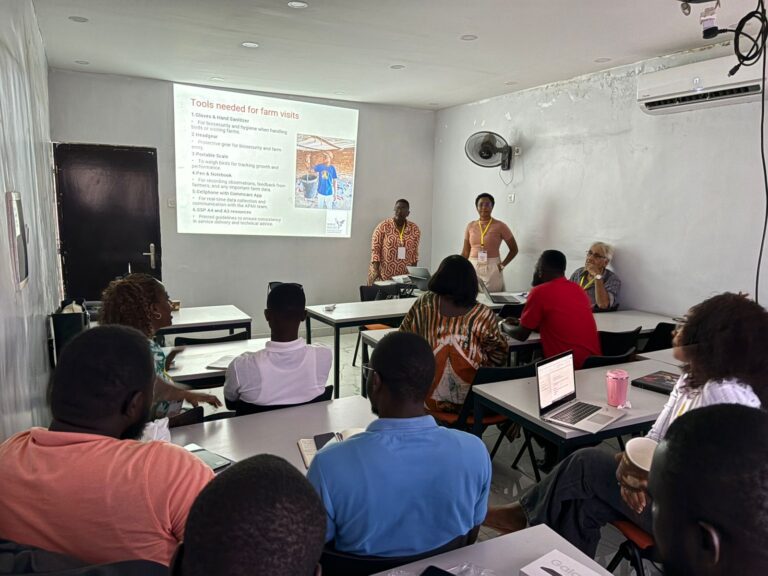
Eve Kamba provides important training opportunities to FSRs during the Middle Phase of each PMI program.
Training also evolves during the middle phase. Instead of focusing on startup basics, sessions shift to specialized topics such as gender and nutrition, or sales and marketing.
“In The Gambia, we just completed a round of integrated training for new female FSRs,” says Eve Kamba, WPF Training Coordinator. “These trainings go beyond transferring knowledge, they’re about building a confident, capable frontline workforce.”
WPF also helps partner companies internalize training by co-leading sessions with staff and experienced FSRs, strengthening their ability to deliver ongoing training over many years to maintain momentum through staff turnover. “It’s not just about what WPF delivers,” adds Eve. “It’s about ensuring that companies can train well after we’re gone.”
The Finance and Operations Lens
From a financial perspective, the middle phase shifts focus from capital expenditure to operations. Payroll becomes a larger portion of the budget, and partners begin shouldering more of the funding model.
“We focus more on profitability,” explains James Ferns, WPF Financial Controller. “Market conditions often require us to revisit assumptions made during the planning stage and adjust our models accordingly.”
This is also when the routine of financial reporting becomes critical. “If strong reporting habits weren’t established early on, they start to slip,” James explained. “Sometimes staff turnover means retraining is needed, and the learning curve can be steep. But we always remind partners that these reports are more than funder requirements, they’re key to long-term success and profitability.”
Data with Direction
In the early stages, data collection is about introducing systems and training teams. But in the middle phase, the focus changes.
“The middle phase is when data starts to work for us,” says Maureen. “We use it to make real-time decisions: Where is growth strong? Where is it lagging? Which FSRs need additional support? We also begin introducing evaluation tools like baseline surveys and pulse surveys, which keep us connected to on-the-ground realities.”
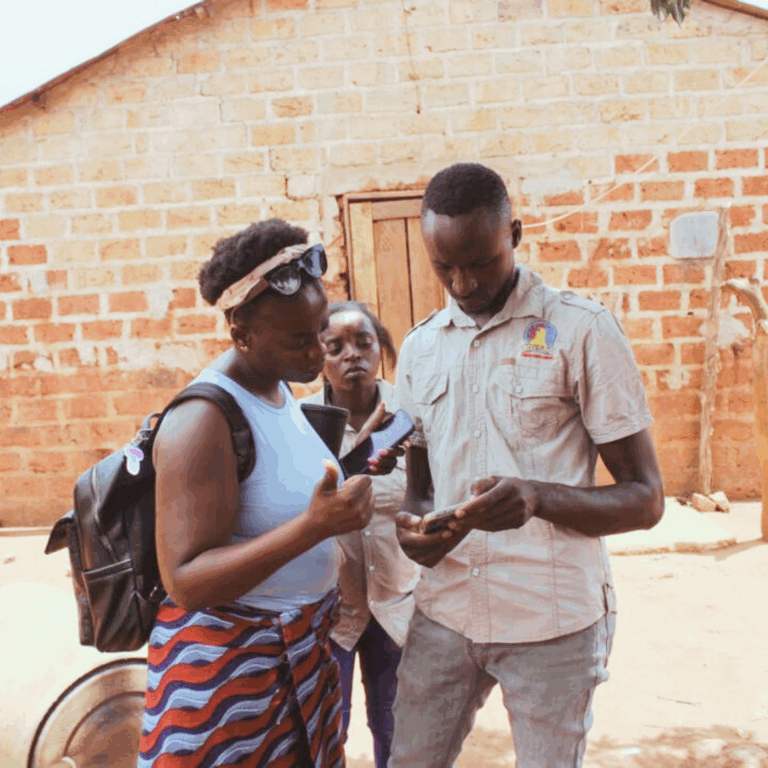
Tokozile Ngwenya works with Hybrid FSRs to review and strengthen the data they are submitting to the CommCare platform.
In the middle phase, CommCare matures from a data collection tool to a powerful decision-making resource.“This is when dashboards come alive,” says Tokozile N. Ngwenya, WPF CommCare Coordinator. “My focus is making sure data flows consistently into Power BI dashboards. For many partners, it’s the first time they see their performance so clearly. That clarity builds confidence but also points out where more effort is needed.”
As expectations rise, so does the pressure for quality data. “It’s no longer just about getting data in. It has to be complete and correct,” Tokozile explains. “We’ve built new tools, cheat sheets, and regular check-ins to help FSRs navigate that shift. It’s a sign of maturity, both for the program and for our partners.”
Still, the payoff is worth it. “The most rewarding part is watching local teams take ownership. The people we trained early on are now training others. That’s capacity building in action.”
That transformation, from setup to strategic application and private-partner ownership, makes PMI smarter and more adaptive with each cycle.
Keeping Momentum Alive
The middle phase of PMI isn’t flashy. It’s about the quiet but critical work of consolidation, ownership, and continual improvement.
“It’s a deceptive phase,” reflects Jan. “It feels like things are moving, but without intention, they can just as easily stall.”
This is when real systems take root, local teams step up, and WPF starts to step back. Done well, the middle phase ensures a smooth handoff to local ownership, building a strong foundation for the future.
The APMI Program is being implemented in The Gambia and Sierra Leone with generous funding from the Qatar Fund for Development (QFFD).
CATEGORY
LOCATION